UEFA Announces Referee Rules for 2026/27: VAR's Authority Expands, Strict Monitoring of Time-Wasting
UEFA has unveiled its refereeing approach for the 2026/27 season. While the intervention areas of VAR are expanding, stricter rules will be applied against time-wasting.
UEFA Sets Out Its Refereeing Approach for 2026/27
UEFA has outlined how the updated Laws of the Game will be applied across its competitions during the 2026/27 season, with a clear emphasis on consistency, faster restarts and more controlled use of VAR.
Speaking at a media briefing in Monaco, UEFA director of refereeing Roberto Rosetti explained that the governing body wants the same principles to be interpreted as consistently as possible across European football.
Earlier in the summer, Rosetti met refereeing representatives from all 55 UEFA national associations to align key principles before the new campaign.
Every club competing in UEFA competitions is also set to receive a refereeing briefing before the league phase begins.
The message is straightforward: UEFA wants greater consistency between domestic competitions and European matches.
UEFA Will Be Stricter on Time-Wasting
One of the biggest priorities for the new season is reducing unnecessary delays.
UEFA wants referees to speed up restarts, protect the intensity of matches and avoid situations that lead to excessively long periods of added time.
Rosetti made UEFA’s position clear:
“We will be very strict on these situations.”
The aim is not simply to compensate for wasted time at the end of matches.
UEFA instead wants to prevent those delays from happening in the first place and increase the amount of time the ball is actually in play.
Particular attention will be paid to substitutions, treatment of injured players, throw-ins and goal kicks.
Substituted Players Must Leave Within Ten Seconds
One of the most visible changes concerns substitutions.
Players being replaced must now leave the field within ten seconds.
The measure is designed to prevent substitutions, particularly late in matches, from becoming a deliberate method of slowing the game down.
It fits UEFA’s wider objective of accelerating restarts rather than simply adding large amounts of stoppage time at the end.
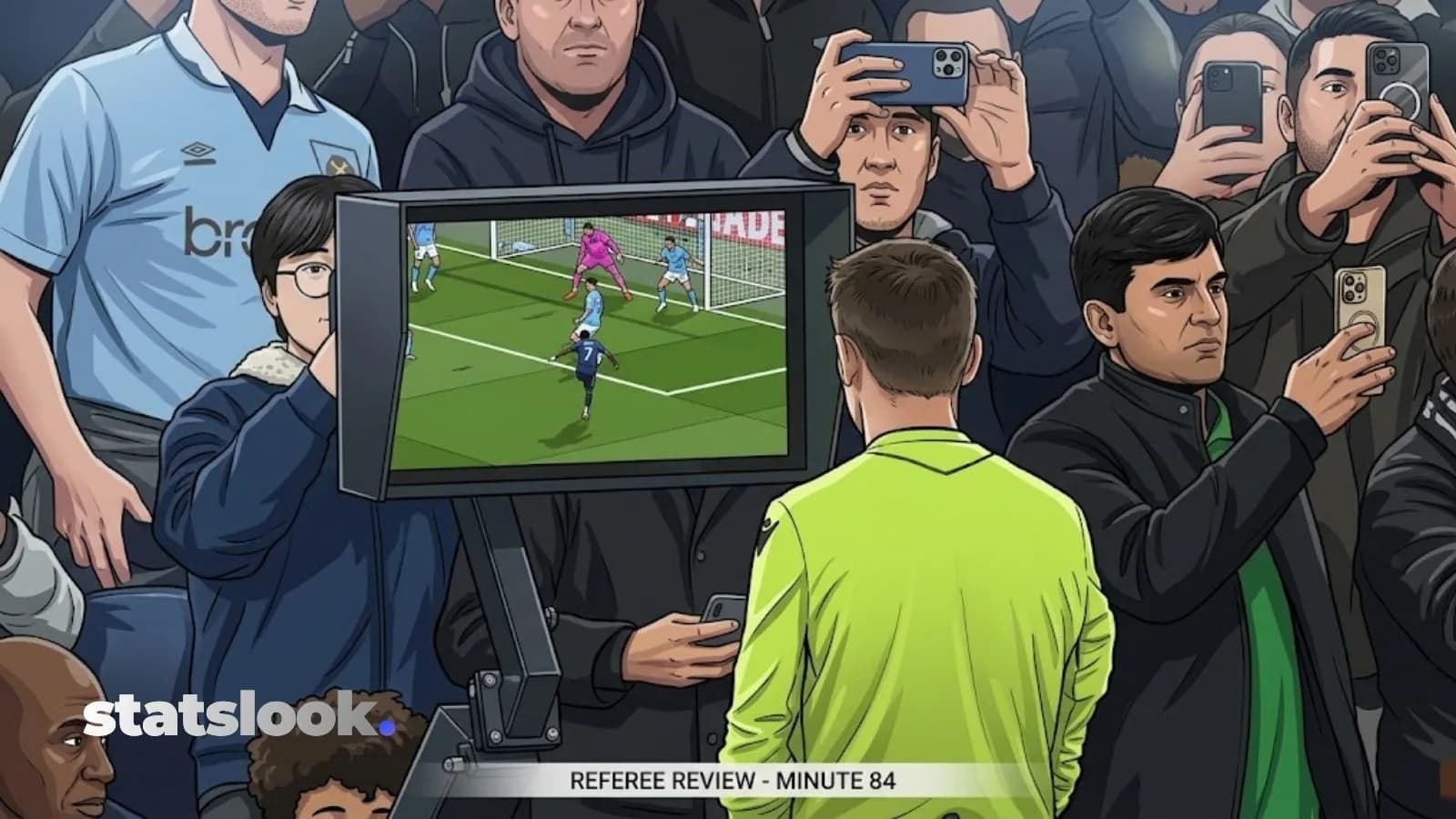
VAR Can Now Intervene in Additional Situations
The 2026/27 season also brings new areas in which VAR may assist the on-field referee.
According to UEFA, the additional intervention areas include:
mistaken identity;
incorrect second yellow cards;
fouls committed by the attacking team before the ball is in play;
goal-kick situations followed by handball offences.
The inclusion of incorrect second yellow cards is particularly significant because a second booking results in a player being sent off and can fundamentally alter a match.
However, the expansion does not mean UEFA wants VAR to become more dominant.
Its stated philosophy remains centred on correcting clear and obvious errors.
UEFA’s VAR Philosophy: Minimum Interference, Maximum Benefit
UEFA continues to emphasise that VAR should support the referee rather than replace them.
Its guiding principle is:
“Minimum interference for maximum benefit.”
The aim is to place the on-field referee back at the centre of decision-making while using VAR only when intervention is genuinely necessary.
UEFA has also published a standardised VAR review process in an attempt to make intervention thresholds more consistent across competitions.
That guidance is intended not only for match officials, but also for clubs, players, leagues and supporters trying to understand when and why VAR should become involved.
Captains Remain the Main Point of Contact With Referees
The referee-captain cooperation model introduced successfully at UEFA EURO 2024 will continue.
Referees may explain major decisions to team captains, while the captain should remain the main player approaching and communicating with the official.
Other players are expected not to surround or confront referees.
Any player who ignores that protocol or behaves in an unsporting or disrespectful manner may receive a yellow card.
UEFA sees the system as a way to improve both communication and respect towards match officials.
UEFA Wants Greater Consistency Across Europe
A central part of Rosetti’s briefing concerned reducing differences in interpretation between countries.
UEFA wants the Laws of the Game to be applied as consistently as possible whether matches are being played in Azerbaijan, England, Finland, France, Türkiye or elsewhere in Europe.
That ambition explains why UEFA has worked directly with refereeing departments from all 55 member associations.
The objective is to reduce situations where similar incidents are treated very differently in domestic leagues and UEFA competitions.
For players and coaches regularly switching between domestic and European football, that consistency could become one of the most important changes of the season.
Clear Line Gives Public Access to Refereeing Guidance
UEFA has also launched Clear Line, a video platform designed to make refereeing guidance more accessible.
The library contains more than 100 video examples across five major areas:
penalties;
red cards;
attacking offences;
factual decisions;
mistaken identity.
The examples show situations in which VAR should intervene as well as cases where the original on-field decision should stand.
Rosetti described the platform as a reference point not only for referees but also for players, coaches, commentators and supporters.
Its purpose is to explain the reasoning behind decisions and create a clearer understanding of how UEFA expects the Laws of the Game to be applied.
Some Law Changes Remain Competition Options
The IFAB has classified some of the 2026/27 amendments as “competition options”, meaning their implementation is left to individual competition organisers.
UEFA’s briefing listed several areas under this category, including:
incorrectly awarded corner kicks;
players covering their mouths;
players leaving the field in protest.
The supplied UEFA text does not provide the detailed implementation of each of these optional measures, so no further procedural interpretation should be inferred from the briefing alone.
What Will Change in UEFA Matches This Season?
The 2026/27 refereeing approach is less about one dramatic rule change and more about how matches are managed.
Three themes stand out.
First, time-wasting will face greater scrutiny, with referees instructed to protect playing time and accelerate restarts.
Second, VAR gains some additional intervention powers, but UEFA is simultaneously stressing that reviews should remain limited and consistent.
Third, captain-referee communication will continue to be reinforced, with other players expected to keep their distance from officials.
UEFA’s ultimate objective is to make matches flow better, reduce major inconsistencies and ensure VAR remains an assistance tool rather than the primary decision-maker.
For Rosetti and UEFA, the success of the approach will ultimately be judged by two concepts:
clarity and consistency.
Source: UEFA — Roberto Rosetti, UEFA Director of Refereeing, 2 September 2026