Where Can the Fenerbahçe-Beşiktaş Derby Be Decided? 5 Critical Tactical Matchups
Fenerbahçe’s increasingly direct approach meets a Beşiktaş side coming off its most efficient attacking display. Five tactical battles could define the derby.
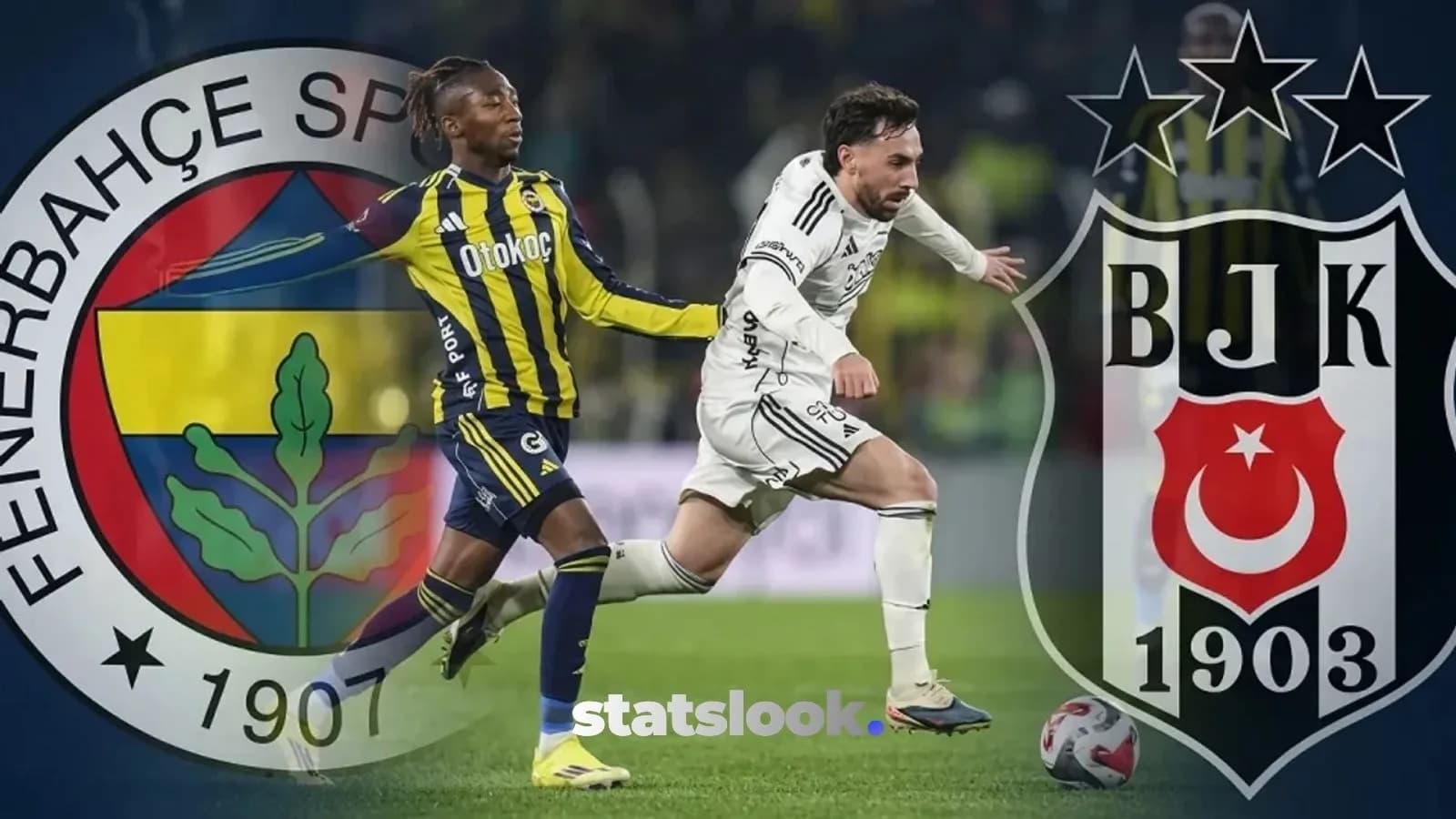
Two Teams Arriving at the Derby Through Different Paths
The numbers behind Fenerbahçe and Beşiktaş suggest Saturday’s derby may be much more complex than a simple battle for possession.
Fenerbahçe have gradually moved away from the possession-heavy model seen earlier in the season. Their recent performances have featured less of the ball, more direct progression and a greater emphasis on reaching high-value shooting areas without needing prolonged control.
Beşiktaş have travelled in the opposite direction. Vincenzo Italiano’s side have generally wanted the ball throughout the season, but possession has not always translated into clear chances. The 6-2 win over Çorum FK changed that picture: Beşiktaş produced 3.20 xG, 15 shots from inside the penalty area and five big chances despite having only 52% possession.
That creates the central tactical question of the derby:
What happens when Fenerbahçe’s increasingly selective, direct attacking model meets a Beşiktaş side that is trying to turn territorial control into genuine penalty-box threat?
Five areas stand out.
1. Beşiktaş May Have More of the Ball — and Fenerbahçe May Be Comfortable With That
Possession could become one of the most misleading numbers of the derby.
Beşiktaş have controlled the ball in most of their matches. They had 66% possession against Eyüpspor, 65% away to Alanyaspor, 71% away to Kauno Žalgiris and 77% in the home meeting with the Lithuanian side.
Fenerbahçe’s recent trajectory has been different.
Their possession dropped to 49% against Konyaspor and 42% against Samsunspor, yet their attacking output remained strong. Against Konyaspor they produced 2.35 xG from 20 shots; against Samsunspor they generated 1.82 xG from 15 shots.
The Samsunspor performance is particularly important in understanding the new version of Fenerbahçe.
They allowed the opponent more of the ball but still controlled the quality of the game. Samsunspor had more possession, yet Fenerbahçe restricted them to a low-value attacking performance while creating the better opportunities themselves.
That distinction matters.
Beşiktaş could finish the derby with considerably more possession and still struggle to impose themselves where it really matters.
The tactical question is therefore not:
Who has the ball?
It is:
What does Beşiktaş actually do with it?
Alanyaspor exposed the difference between territorial dominance and attacking dominance. Beşiktaş had 65% possession, completed 477 passes and attempted 14 shots, yet finished with only 0.94 xG and no big chances.
Fenerbahçe may therefore be perfectly willing to allow Beşiktaş to circulate possession in areas that do not threaten the centre of their defensive structure.
If Beşiktaş have the ball but Vlahović remains disconnected from the final action, possession could become almost irrelevant.
2. Beşiktaş’s Counter-Press Meets Fenerbahçe’s More Direct Build-Up
One of the most interesting battles could develop before Fenerbahçe even reach midfield.
Beşiktaş have repeatedly shown the ability to regain possession quickly after losing it.
Their recovery interval was 11 seconds against Eyüpspor, 13 seconds against Alanyaspor and just seven seconds in the away game against Kauno Žalgiris.
That aggressive recovery behaviour gives Beşiktaş a mechanism for sustaining attacks.
But it also creates a potential weakness.
Fenerbahçe have become increasingly willing to bypass the first line of pressure rather than insist on building every attack through short combinations.
That changes the geometry of the contest.
If Fenerbahçe play directly into the forward line, the first duel becomes important — but the second ball may be even more decisive.
If Beşiktaş win those second balls, their counter-press could immediately restart another attack before Fenerbahçe reorganise.
If Fenerbahçe win them, however, Beşiktaş could suddenly have several players positioned ahead of the ball.
That is exactly the kind of situation in which Fenerbahçe’s more direct attacking structure could become dangerous.
So the critical issue will not simply be whether Beşiktaş press high.
It will be whether they can press without exposing the space behind their pressure.
The first 20 minutes should reveal a great deal about this battle.
If Fenerbahçe repeatedly bypass the Beşiktaş press and begin attacking second balls in advanced areas, the derby could become far more transitional than Beşiktaş would prefer.
3. Fenerbahçe Want to Shoot From Inside the Box — Beşiktaş Usually Protect That Zone Well
Perhaps the clearest tactical confrontation of the derby comes inside the penalty area.
Fenerbahçe’s recent attacking performances have increasingly been built around getting shots from close range rather than simply increasing shooting volume.
Against Konyaspor, 16 of their 20 shots came from inside the penalty area.
That represents an important development.
Fenerbahçe are not merely producing more attempts. They are increasingly finding ways to move the final action closer to goal.
Beşiktaş, meanwhile, have produced several strong defensive performances inside their own box.
Eyüpspor failed to register a single shot from inside the penalty area and finished with only 0.11 xG.
Alanyaspor generated seven shots from inside the box but produced only 0.43 xG from those attempts.
Çorum FK had 11 shots against Beşiktaş, but only three were taken from inside the penalty area.
That creates a very clean tactical battle:
Fenerbahçe’s preferred attacking zone is also one of the areas Beşiktaş have generally defended well.
For that reason, total shot count could be misleading on Saturday.
If Fenerbahçe take eight first-half shots but most of them come from distance, Beşiktaş may be controlling the most important part of the game.
If five or six of those attempts come from inside the penalty area, the opposite will be true.
The better indicator will be:
How often can Fenerbahçe actually enter the box before shooting?
4. Beşiktaş Need to Get Vlahović Closer to Goal
The same question applies at the other end.
Beşiktaş’s attacking ceiling is closely linked to the quality of chances created for Dušan Vlahović.
Against Alanyaspor, he had only two shots and generated 0.34 xG.
In the away match against Kauno Žalgiris, he again had two attempts and 0.29 xG.
Then came Çorum FK.
Vlahović produced five shots, 1.36 xG and 1.76 xGoT, scoring three times.
The difference was not simply finishing.
The entire quality of his involvement changed.
Beşiktaş found Vlahović more frequently and in more dangerous positions. Their team total of 15 shots from inside the box reflects the same development.
That makes Saturday an important test.
If Vlahović spends the derby receiving with his back to goal away from the penalty area, the Alanyaspor and Kauno problems may have returned.
If he begins receiving repeated service inside the box, however, Fenerbahçe’s defensive structure will face a much more serious challenge.
That is where Orkun Kökçü and Vaclav Cerny become particularly important.
Kökçü has repeatedly been one of Beşiktaş’s main creators. He registered four key passes in each of the two Hradec Králové matches and three against Eyüpspor.
Cerny has provided both goals and final-third creation, while Trossard also contributed three key passes against Çorum FK.
Fenerbahçe therefore cannot defend Vlahović in isolation.
They have to disrupt the passing lanes feeding him.
Stopping the striker may begin with stopping the players who deliver the ball into the spaces where he becomes dangerous.
5. Set Pieces and the 61–75 Minute Period Could Become Hidden Deciders
When two strong sides begin cancelling each other out in open play, set pieces become more valuable.
Both teams have already shown significant production from dead-ball situations.
Fenerbahçe generated 0.73 set-piece xG against Górnik Zabrze in the opening qualifier.
Beşiktaş produced 1.25 set-piece xG in the 6-2 win over Çorum FK.
The home meeting with Kauno Žalgiris also showed how important dead-ball situations can become in Beşiktaş’s attacking output.
That means corners and attacking free-kicks should not be treated as secondary events.
In a derby where open-play spaces could be restricted, one or two dead-ball situations may carry disproportionate value.
There is also a second timing issue worth monitoring.
Fenerbahçe have shown signs of losing attacking continuity in the 61–75 minute period in recent matches.
Beşiktaş have not consistently dominated that same phase across the season, but their most recent match provided a notable contrast: against Çorum FK they generated 0.45 xG in that 15-minute window and scored twice.
That does not yet establish a stable Beşiktaş trend.
But it does create an intriguing intersection.
If the derby remains level after an hour, substitutions and midfield freshness could become crucial.
A team that controls the first 15 minutes after the hour mark may gain the clearest tactical advantage of the entire second half.
The Real Midfield Battle Is About What Happens After Possession Is Won
Derbies are often reduced to individual midfield match-ups.
But the data from these two teams point toward something more specific.
The real issue may not be which midfield wins more duels.
It may be what happens immediately after those duels are won.
Fenerbahçe have become more efficient at converting recoveries into attacks that reach the penalty area.
Beşiktaş, meanwhile, are trying to ensure their possession sequences eventually produce central access and service into Vlahović.
If Fenerbahçe win the ball and connect immediately with their forward runners, Beşiktaş could be forced into recovery runs.
If Beşiktaş regain possession and quickly connect Kökçü, Cerny or Trossard with Vlahović, Fenerbahçe’s low-possession structure could turn into prolonged defensive pressure.
The first three or four actions after possession changes may therefore matter more than possession itself.
Fenerbahçe’s Key Objective: Make Beşiktaş’s Possession Harmless
Fenerbahçe do not need to dominate the ball to produce the type of match they want.
Their recent performances have already demonstrated that.
The ideal scenario would be to allow Beşiktaş possession while preventing that possession from reaching Vlahović in high-value areas.
From there, Fenerbahçe can look for more direct progression and attack the spaces created when Beşiktaş commit players forward.
The risk is obvious.
There is a fine line between allowing possession and becoming passive.
If Fenerbahçe retreat too deeply for too long, Beşiktaş’s territorial pressure could begin generating repeated entries into the box.
The success of the model therefore depends on remaining compact without surrendering the initiative completely.
Beşiktaş’s Key Objective: Do Not Confuse Possession With Control
Beşiktaş face the opposite challenge.
Having 65 or 70% possession will mean very little if Vlahović remains isolated and their shots come from low-value positions.
The Alanyaspor and Kauno away matches already demonstrated that problem.
The Çorum FK game offered a much more encouraging blueprint.
Beşiktaş had only 52% possession but produced 3.20 xG, five big chances and 15 shots from inside the box.
That should be the real target.
The meaningful questions are:
How often can Vlahović receive in finishing positions?
How regularly can Kökçü and Cerny play forward-facing passes around the box?
How many Beşiktaş shots come from inside the area?
Can they force Fenerbahçe’s defensive line to move backwards rather than simply sideways?
If the answers are positive, possession will have value.
If not, the raw percentage may tell us very little.
The Most Likely Tactical Shape
Based strictly on the match reports available so far, one structural scenario appears particularly plausible.
Beşiktaş may have more of the ball.
Fenerbahçe may be perfectly comfortable with that.
Fenerbahçe could look to bypass pressure more directly, compete aggressively for second balls and attack the penalty area without needing long possession sequences.
Beşiktaş, meanwhile, will need to prove that the attacking efficiency seen against Çorum FK was not a one-match spike.
If the match remains tight after an hour, the 61–75 minute period and set pieces could become increasingly important.
The central conclusion from the second part of our derby series is therefore straightforward:
Possession may shape the appearance of the game, but penalty-box access is far more likely to decide it.
Fenerbahçe have become increasingly consistent in creating that access.
Beşiktaş showed against Çorum FK that they can do the same.
Saturday will tell us which development is more sustainable against a significantly stronger opponent.
Data Note
This analysis is based exclusively on the 2026/27 StatsLook match reports provided for Fenerbahçe and Beşiktaş. Matches from different competitions and against different opponents are used to identify recurring behaviours and in-season tactical changes, not as direct opponent-strength comparisons.