Did Messi End the GOAT Debate? Why Did Star Coaches Fall Behind?
Following Argentina's victory over England, which secured their place in the World Cup final for the second consecutive time, Messi's place in history is once again up for discussion. Additionally, a striking picture has emerged regarding why big-name coaches have fallen behind in this tournament.
Did Messi End the Greatest of All Time Debate?
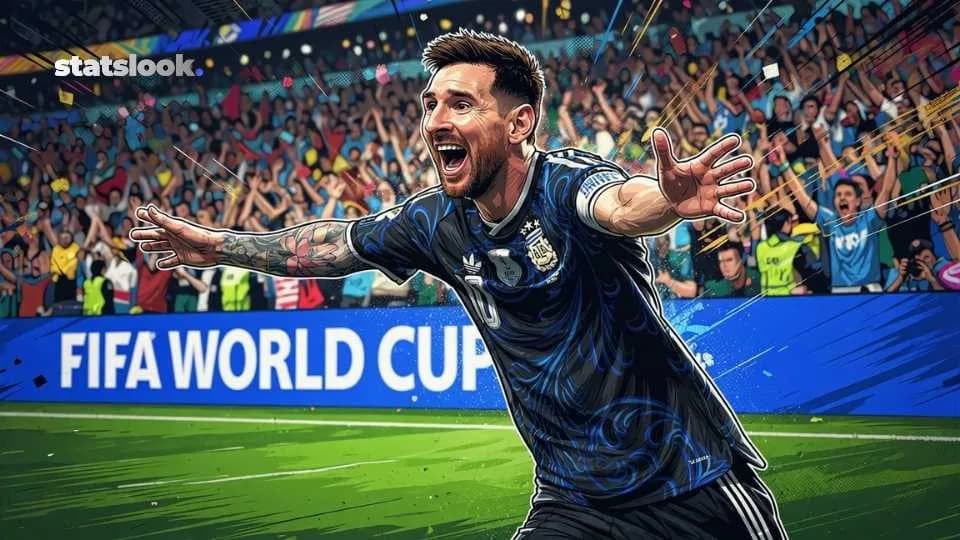
Argentina defeated England 2-1 in Atlanta to reach the World Cup final for the second consecutive time. This comeback, inspired by Messi, was crowned by Thomas Tuchel's tactical choices failing after England took a 1-0 lead.
Author Nick Miller argues that Messi's performance provides new evidence for the debate over who is the "greatest of all time." According to the article, you can try to stop Messi; he may not score in a match sometimes — but most of the time, he finds a way to outsmart his opponents. While England's tactic of leaving him plenty of space outside the penalty area after the goal can be criticized, there is no other explanation for their defeat but to acknowledge Messi's brilliance.
In the early days of the tournament, there was much talk about big stars stepping up, and indeed names like Kylian Mbappé, Erling Haaland, Vinicius Junior, Harry Kane, Jude Bellingham, and Michael Olise met expectations by scoring goals. Cristiano Ronaldo also partially fits into this category — although it is clear that he has been a burden to his team, he scored three goals in five matches.
However, according to the article, the only one left standing in the end was Messi. None of the other stars made a decisive contribution in the matches their teams were eliminated from. Although Messi did not score against England, he created the difference by assisting both goals (one with a simple pass, the other with a beautiful cross). While he advanced to the final once again, all the other stars returned home.
Why Did Star Coaches Fall Behind?
The second main theme of the article focuses on the profiles of the two coaches who will face each other in the final. When Lionel Scaloni was appointed in 2018, no one thought he would be the one to lead Messi to a World Cup victory. After Jorge Sampaoli was dismissed following that year's tournament, Scaloni, one of Sampaoli's assistants, was temporarily appointed because the Argentine federation could not allocate a budget for a big name. Even Diego Maradona reacted harshly to this appointment at the time, stating that Scaloni "couldn't even manage traffic."
However, if Scaloni defeats Spain on Sunday, he will have won four major tournaments in a row — two Copa America and two World Cups. This would be the first instance since Vittorio Pozzo with Italy in the 1930s of a coach defending the World Cup title consecutively.
On the other side is Spain's Luis de la Fuente. De la Fuente rose through the ranks by first coaching the U19, then U21 and U23 national teams, before taking charge of the senior national team in 2022.
According to the article, both coaches have managed to build functioning teams despite not having great fame: Scaloni has created a framework that makes the best use of Messi's genius, while De la Fuente has adapted Spain's traditional possession game to the new generation. The author suggests that the lack of fame for these figures has actually helped their success, as their lower egos have pushed them to focus more on the team's needs rather than imposing their pre-formed ideas.
In contrast, the tournament yielded different results for countries that opted for big-name and expensive coaches: Tuchel's shortcomings cost England the semi-final, Mauricio Pochettino could not elevate the U.S. beyond the level indicated by their talent, and Carlo Ancelotti was eliminated in the Round of 16 with Brazil. The author emphasizes that at least at the national team level, big names and deep pockets do not guarantee success.
Third Place Match: The Saddest Match in Football?
The final section of the article addresses the third-place match between France and England, which will take place on Saturday in Miami. Both teams will come into this match following disappointing semi-final defeats, and the author notes that enthusiasm is expected to be low.
Still, it is emphasized that the match is not entirely meaningless — third place is better than fourth, and it is still a real World Cup match. Additionally, for Kylian Mbappé, this represents an opportunity for the Golden Boot. Mbappé is currently tied with Messi at 8 goals, and unlike Messi, who will face a solid Spanish defense, it may be easier for him to increase his tally against a somewhat disinterested England. Similar examples have occurred in the past: Croatia's Davor Šuker in 1998, Italy's Salvatore Schillaci in 1990, and Germany's Thomas Müller in 2010 all secured the top scorer title in the third-place match.
Conclusion
Messi's performance against England adds another argument to the debate over who is the greatest in history — creating the difference with two assists even without scoring is, according to the author, the essence of "greatness." Meanwhile, the profiles of the two coaches facing off in the final provide a striking example that big names and big budgets do not guarantee success in national team football.
Source: This article is based on a piece published by Nick Miller in The Athletic.