Who Is Deniz Gül? Porto’s Turkish Striker Analysed
Deniz Gül’s journey from Stockholm to Porto combines size, mobility and technical quality. We analyse the 22-year-old Turkish striker’s development through StatsLook data.
From Stockholm to Porto
Deniz Daniel Gül was born in Stockholm on 2 July 2004 to a Turkish father and a Swedish mother.
He spent part of his childhood in Marmaris before returning to Sweden, where he grew up in the southern districts of Stockholm. Although he was raised between two cultures, his connection with Turkey remained strong. Gül has said that representing Turkey had been a childhood ambition and that he felt particularly at home there.
His football journey began at the age of six with local side Stuvsta IF.
From there, he progressed through Segeltorps IF, IF Brommapojkarna, AIK and FC Djursholm before eventually joining Hammarby.
Those who worked with him during his youth years often highlighted more than his physical potential.
Gül was described as a calm and observant young player who tried to understand how situations developed rather than simply reacting to the ball. Coaches noticed his ability to read sequences, wait for the right moment and make measured decisions.
His physical development arrived later.
After a significant growth spurt, Gül eventually reached 1.92 metres, giving him the frame of a traditional centre-forward without losing the mobility and technical qualities developed earlier in his career.
The Hammarby Breakthrough
Gül joined Hammarby’s academy in 2021 and quickly became one of the most promising attacking players in the club’s youth structure.
In 2022, he helped Hammarby win the P19 Allsvenskan, finished as the competition’s leading scorer and was named Forward of the Year.
During that period, he also turned down an opportunity to join Cagliari.
His priority was to reach Hammarby’s first team.
That opportunity arrived in 2023. He initially spent significant time with reserve side Hammarby TFF before earning a more regular place around the senior squad in 2024.
Martí Cifuentes, who helped bring Gül into the first-team environment, highlighted several of the qualities that still define his profile today: intelligent movement, physical strength, the ability to protect the ball, defensive work and, above all, danger inside the penalty area.
Those characteristics eventually attracted Porto.
Why Porto Moved for Deniz Gül
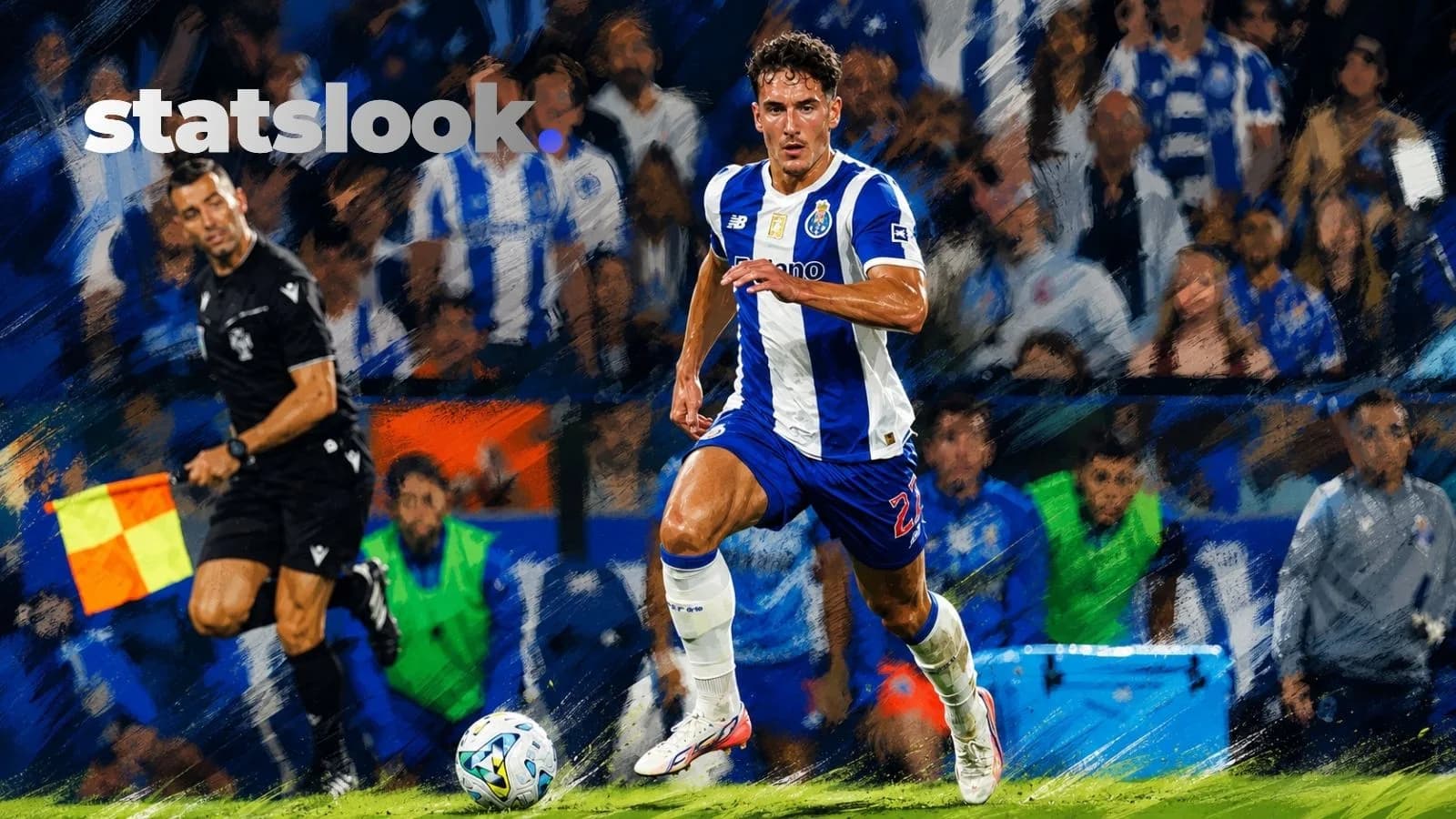
Gül joined Porto in August 2024 and signed a contract running until 2029.
The attraction was easy to understand.
At 1.92m, he already had the physical platform of a powerful striker. But Porto were not recruiting a forward who could only compete in the air or play with his back to goal.
Former Hammarby teammate Markus Karlsson highlighted Gül’s strength, ability to accelerate with the ball, shooting range and aerial ability.
Former Porto player Fredrik Söderström described him as an “old-school No.9”, pointing to his physicality, work rate and instinct for goal.
The combination of those assessments gives a more complete picture.
Gül has many of the tools associated with a traditional centre-forward, but his game is not limited to traditional centre-forward actions.
2024/25: The Physical Tools Were Clear, the Attacking Output Was Still Limited
Gül’s first Liga Portugal season showed a player still adapting to senior football at Porto.
In 2024/25 he recorded:
14 appearances
420 minutes
1 goal
1.46 xG
0 assists
0.21 goals per 90
0.31 xG per 90
2.14 shots per 90
The physical side of his game stood out more clearly.
He averaged 5.36 duels won per 90 and 3.21 aerial duels won per 90.
For a 1.92m striker, aerial strength is an obvious asset. The bigger question was how effectively he could convert that physical advantage into penalty-box production.
In his first season, the attacking numbers remained modest.
An average of 0.31 xG per 90 and 0.43 shots on target per 90 suggested there was still significant room for development.
At the same time, his 77.1% passing accuracy and 15.86 completed passes per 90 showed that he was not simply waiting for service inside the box.
2025/26: The Real Step Forward
The more significant progression came during the 2025/26 Liga Portugal season.
Gül played 29 matches and 1,167 minutes, scoring five goals and registering one assist.
His total xG was 5.58.
That is important because the gap between expected goals and actual goals was minimal:
5 goals from 5.58 xG.
He was neither dramatically overperforming nor seriously underperforming his chances.
Per 90 minutes, he produced:
0.39 goals
0.43 xG
2.01 shots
1.00 shots on target
0.77 key passes
0.31 big chances
The main improvement came in his goal threat.
His goals per 90 increased from 0.21 to 0.39, xG from 0.31 to 0.43, and shots on target from 0.43 to 1.00.
His total shot volume barely changed:
2.14 → 2.01 shots per 90.
That distinction matters.
Gül did not become more dangerous simply by shooting more often.
He became more dangerous because the quality and accuracy of his attempts improved.
Fewer Touches, More End Product
Another interesting change can be seen in his involvement outside the penalty area.
In 2024/25, Gül averaged 32.79 touches per 90.
A year later, that dropped to 25.76.
Completed passes also fell from 15.86 to 7.94 per 90, while passing accuracy declined from 77.1% to 65.6%.
Those numbers might initially look like regression.
But alongside the improvement in goals and xG, they tell a different story.
Gül was becoming less involved in general possession while becoming more effective closer to goal.
In other words, Porto appeared to be moving him towards a more clearly defined striker role.
Less circulation.
More penalty-box responsibility.
Europa League Numbers Showed a Different Side
Gül’s 2025/26 Europa League campaign offered another layer to his profile.
He played 392 minutes across 10 matches and registered:
1 goal
1 assist
1.14 xG
Per 90, he produced 2.98 shots, 1.61 shots on target and 1.38 key passes.
Those figures suggest a player who became more involved in attacking actions in European competition.
There is, however, an important sample-size caveat.
Gül played only 392 Europa League minutes, below the 450-minute threshold shown in the StatsLook comparison pool.
For that reason, his percentile rankings in the competition should not be treated as a reliable measure of where he truly ranked among Europa League strikers.
The raw per-90 numbers remain useful, but the rankings are not robust enough for a firm comparison.
1.92m, But Not Just a Target Man
The easiest mistake when assessing Deniz Gül is to look at his height and immediately classify him as a target man.
His physical qualities clearly matter.
He is 1.92m, weighs 82kg and is comfortable competing with centre-backs.
He can protect the ball.
He can receive with his back to goal.
He can attack aerial deliveries.
But that is not the full profile.
What makes Gül more interesting is that he combines those qualities with mobility.
He can move away from the centre-backs, receive into feet, connect play and attack space behind the defence.
That makes hybrid striker a more accurate description.
He possesses several tools of a traditional No.9 while trying to meet the mobility demands of the modern game.
His Aerial Numbers Also Reveal a Change in Role
Gül’s aerial output changed significantly between his first two Liga Portugal seasons.
In 2024/25, he won:
3.21 aerial duels per 90.
In 2025/26:
2.08.
His total duels won also fell from 5.36 to 4.16 per 90.
That does not necessarily mean his physical game declined.
It may instead reflect a change in role.
During his first season, Gül appeared more frequently involved as a physical reference point and linking forward.
By 2025/26, more of his value came from arriving in finishing positions.
Fewer duels combined with greater goal threat can therefore be interpreted positively.
For a striker of his size, the objective is not simply to win as many aerial duels as possible.
The more important question is how effectively that physical presence helps him reach dangerous areas.
The Creative Side Is Worth Watching
The opening stages of 2026/27 are far too small a sample to draw conclusions from, but they contain one interesting signal.
Gül has played only 92 Liga Portugal minutes so far.
That means the percentile rankings shown in the current StatsLook sample should not be used seriously, especially as the comparison filter itself is set at 180+ minutes.
The raw numbers, however, are notable:
0.52 xG per 90
3.91 shots per 90
2.93 key passes per 90
0.98 big chances per 90
He has not scored yet, with a total xG of 0.53.
The most intriguing figure is the key-pass rate.
Gül averaged just 0.77 key passes per 90 in the league last season. The early 2026/27 number is far higher.
It is much too early to call that a trend.
But it is worth monitoring because it supports the idea that Gül may have more creative potential than a typical penalty-box striker.
What Is the Next Step as a Goalscorer?
Gül’s five goals from 5.58 xG in 2025/26 suggest his biggest issue was not finishing efficiency.
The more obvious limitation was volume.
An average of 2.01 shots per 90 is not especially high for a striker expected to score consistently at an elite level.
That creates the central development question:
Can Deniz Gül get into high-quality finishing situations more often?
The physical tools are there.
The penalty-box movement is developing.
The quality of his chances improved between his first two seasons.
The next step is combining those improvements with greater attacking frequency.
His early 2026/27 rate of 3.91 shots per 90 is interesting in that context, but 92 minutes is nowhere near enough to draw a conclusion.
Pressing and Defensive Work Are Part of the Package
The defensive side of Gül’s game has also been highlighted consistently by coaches.
Cifuentes specifically pointed to his willingness to contribute without the ball.
In 2025/26 Liga Portugal, Gül averaged 0.69 tackles per 90, a useful figure for a centre-forward.
His early 2026/27 rate is even higher at 1.96, although once again the sample is far too small to treat it as a stable trend.
What matters is that the statistical evidence aligns with the scouting descriptions.
Gül is not a striker who only wants to contribute when his team has possession.
He is willing to press centre-backs, compete physically and work in the first defensive line.
For teams that want to defend aggressively from the front, that can be an important part of his value.
Choosing Turkey Was Part of a Longer Personal Story
Gül represented Sweden at youth international level before choosing Turkey at senior level.
His decision, however, does not appear to have been a late career calculation.
His own comments describe a connection with Turkey that goes back to childhood.
Turkish was spoken at home, he had family ties to the country and spent part of his early life in Marmaris.
He has also said that playing for Turkey had been something he wanted from a young age.
For that reason, his international story is more nuanced than simply describing him as a Swedish-developed player who later switched allegiance.
Turkey had been part of his identity long before the decision became a football question.
Scout Verdict: Still Developing, But the Toolset Is Valuable
Deniz Gül is not yet a finished striker.
At 22, he should not be expected to be one.
His Porto numbers nevertheless show clear development in several important areas.
The progression between his first and second Liga Portugal seasons is particularly encouraging:
Goals/90: 0.21 → 0.39
xG/90: 0.31 → 0.43
Shots on target/90: 0.43 → 1.00
And he achieved those improvements without increasing his overall shot volume.
That points towards better positioning, better shot selection and improved chance quality.
There are still areas to develop.
A rate of 2.01 shots per 90 in 2025/26 remains relatively modest.
His passing volume and efficiency also dropped significantly, suggesting that his link play can still become cleaner as his role evolves.
But Gül’s advantage is the range of tools available to him.
He combines a 1.92m frame with aerial ability, hold-up play, movement, pressing effort, penalty-box instincts and occasional creative contribution.
That is why the most accurate description may be:
Deniz Gül is not simply a target man. He is a mobile No.9 who can also use target-man qualities.
The next stage of his development at Porto is less about identifying his potential and more about turning those tools into repeatable production.
If he can combine the improved chance quality seen in 2025/26 with greater shot volume and cleaner link play, he has the profile to develop from an interesting physical prospect into a much more complete centre-forward.
Data Note
Deniz Gül has played only 92 Liga Portugal minutes in 2026/27, so current-season percentile rankings should not be used for evaluation.
His 2025/26 Europa League sample was 392 minutes and his 2024/25 Europa League sample only 87 minutes. Both fall below the 450-minute comparison threshold shown in StatsLook, so percentile rankings from those campaigns were excluded from the scout assessment.