

2026 Dünya Kupası Rehberi: Yeni Format, Yeni Kurallar, Yeni Dönem
2 Haziran 2026
2026 FIFA Dünya Kupası'na sadece 9 gün kaldı. İlk kez 48 takımın mücadele edeceği turnuva, 104 maçlık dev organizasyon, yeni kurallar ve genişletilmiş eleme sistemiyle futbol tarihinin en büyük Dünya Kupası olmaya hazırlanıyor. Peki yeni format ne getirecek?

9 Gün Kala: Tarihin En Büyük Dünya Kupası Başlıyor! 48 Takımlı Yeni Format Futbolu Nasıl Değiştirecek?
Futbol dünyasının dört yıldır beklediği an yaklaşıyor.
2026 FIFA Dünya Kupası'nın başlamasına artık sadece 9 gün kaldı. Ancak bu turnuva, daha önce gördüğümüz hiçbir Dünya Kupası'na benzemeyecek.
İlk kez 48 takımın mücadele edeceği organizasyon, 104 maçlık dev fikstürü, üç farklı ev sahibi ülkesi ve yeni kurallarıyla futbol tarihinde yeni bir dönemin kapısını aralıyor.
11 Haziran'da Meksika'nın efsanevi Estadio Azteca Stadı'nda başlayacak turnuva, yalnızca bir Dünya Kupası değil; aynı zamanda FIFA'nın futbolun geleceğine yönelik en büyük deneylerinden biri olacak.
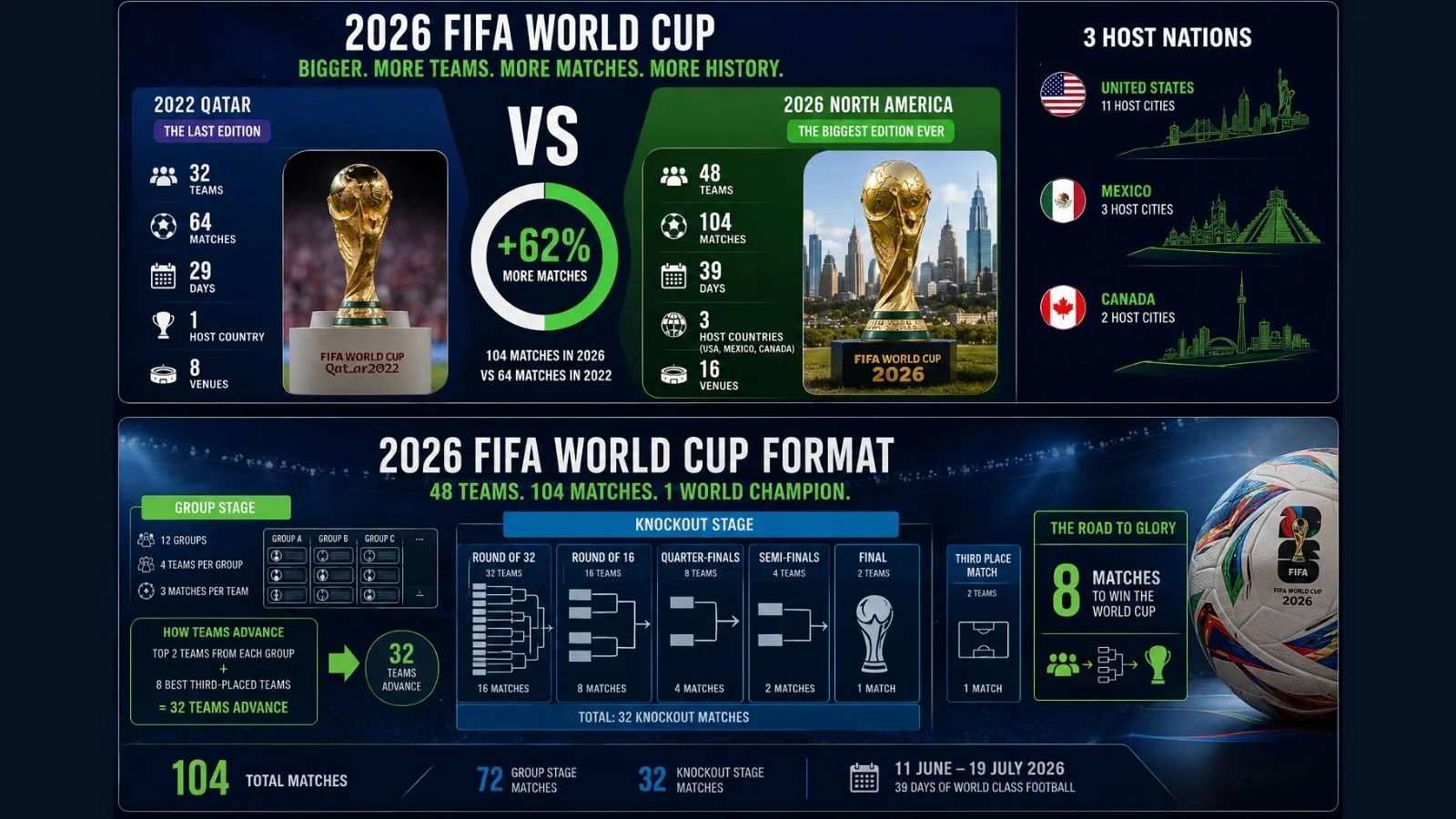
Peki 2026 Dünya Kupası'nı bu kadar özel yapan ne?
Tarihin En Büyük Dünya Kupası
2022 Katar Dünya Kupası'nda 32 takım mücadele etmiş ve toplam 64 maç oynanmıştı.
2026 turnuvasında ise:
48 takım
104 maç
39 günlük organizasyon
3 ev sahibi ülke
16 farklı şehir
yer alacak.
Bu da önceki Dünya Kupası'na göre yaklaşık %62 daha fazla maç anlamına geliyor.
FIFA'nın temel hedefi daha fazla ülkeye Dünya Kupası sahnesinde yer verme fırsatı sunmak.
Özellikle Afrika, Asya ve CONCACAF ülkelerinin temsil sayısındaki artış, turnuvanın daha küresel bir yapıya kavuşmasını sağlayacak.
Üç Ülke, Tek Turnuva
2026 Dünya Kupası aynı zamanda tarihte ilk kez üç ülkenin ortaklaşa ev sahipliği yaptığı Dünya Kupası olacak.
Ev sahibi ülkeler:
Amerika Birleşik Devletleri
Meksika
Kanada
Toplam 16 şehir ve 16 stadyum turnuvaya ev sahipliği yapacak.
Öne çıkan stadyumlar arasında:
Estadio Azteca (Mexico City)
SoFi Stadium (Los Angeles)
MetLife Stadium (New York/New Jersey)
BC Place (Vancouver)
Lumen Field (Seattle)
Levi's Stadium (Santa Clara)
bulunuyor.
Final karşılaşması ise 19 Temmuz'da MetLife Stadium'da oynanacak.
Yeni Format Nasıl İşleyecek?
2026 Dünya Kupası'nın en büyük değişimi formatta yaşanıyor.
Grup Aşaması
Turnuvada:
12 grup
Her grupta 4 takım
Her takım 3 grup maçı
oynayacak.
Grup aşamasının ardından:
Her grubun ilk 2 takımı
En iyi 8 grup üçüncüsü
üst tura yükselecek.
Böylece toplam 32 takım eleme aşamasına kalacak.
Yeni Tur: Son 32
Daha önce Dünya Kupaları doğrudan Son 16 Turu ile başlıyordu.
Yeni sistemde ise ilk kez:
Son 32
Son 16
Çeyrek Final
Yarı Final
Final
aşamaları uygulanacak.
Bu nedenle finale çıkan ekipler artık 7 yerine 8 maç oynayacak.
Daha Fazla Takım, Daha Fazla Sürpriz Mi?
FIFA'nın savunduğu en önemli argümanlardan biri bu.
Daha fazla takımın katılması sayesinde:
Daha fazla futbol kültürü temsil edilecek.
Küçük ülkeler büyük sahnede yer alabilecek.
Sürpriz sonuçların sayısı artabilecek.
Özellikle son yıllarda yükselen milli takımların daha fazla fırsat bulacağı düşünülüyor.
Fas'ın 2022'de yarı finale çıkması veya Gürcistan'ın EURO 2024'te yarattığı etki gibi hikâyelerin artık daha sık görülmesi bekleniyor.
Ancak Riskler de Var
Yeni sistem herkes tarafından olumlu karşılanmıyor.
Eleştirilerin merkezinde ise oyuncu yükü bulunuyor.
Bir oyuncunun son iki yıldaki takvimi düşünüldüğünde:
Kulüp sezonu
Avrupa kupaları
Ulusal ligler
Uluslar Ligi
Dünya Kupası
derken maç sayıları rekor seviyelere ulaşmış durumda.
2026 Dünya Kupası'nın 39 gün sürmesi ve bazı takımların 8 maça kadar çıkabilecek olması, oyuncu yorgunluğu tartışmalarını yeniden gündeme getirdi.
Özellikle ABD, Meksika ve Kanada arasındaki uzun seyahat mesafeleri de lojistik açıdan önemli bir sınav olacak.
Dünya Kupası'nda Yeni Kurallar
2026 turnuvası yalnızca formatıyla değil, yeni oyun kurallarıyla da dikkat çekiyor.
FIFA ve IFAB tarafından onaylanan bazı uygulamalar ilk kez bu çapta bir organizasyonda kullanılacak.
Hidrasyon Molaları
Sıcak hava koşulları nedeniyle her yarıda ek hidrasyon molaları uygulanabilecek.
Bu durum özellikle öğle saatlerinde oynanacak karşılaşmalarda büyük önem taşıyor.
Zaman Kaybına Karşı Sert Önlemler
Hakemler artık zaman geçirme konusunda çok daha sert olacak.
Yeni uygulamalara göre:
Taç atışları için görünür süre takibi yapılacak.
Kale vuruşları belirlenen süre içinde kullanılmak zorunda olacak.
Oyundan çıkan oyuncuların sahayı hızlı terk etmesi gerekecek.
Amaç, topun oyunda kaldığı süreyi artırmak.
VAR Yetkileri Genişliyor
VAR sistemi de kapsamını genişletiyor.
İncelenebilecek yeni durumlar arasında:
İkinci sarı kart sonrası kırmızı kartlar
Hatalı köşe vuruşu kararları
Oyuncu kimliği karışıklıkları
Duran top öncesi kritik ihlaller
yer alıyor.
FIFA'nın hedefi hakem hatalarını minimum seviyeye indirmek.
Türkiye İçin Yeni Format Avantaj Sağlayabilir
48 takımlı yapı Türkiye açısından da önemli fırsatlar sunuyor.
Yeni sistemde grup üçüncülerinin önemli bir kısmı üst tura çıkabildiği için hata payı geçmiş turnuvalara göre daha yüksek.
Bu durum özellikle dengeli gruplarda mücadele edecek takımlar için ciddi avantaj oluşturuyor.
Vincenzo Montella yönetimindeki Türkiye Milli Takımı, yeni formatın sunduğu fırsatlardan yararlanabilecek ekipler arasında gösteriliyor.
Futbolda Yeni Bir Dönem Başlıyor
2026 Dünya Kupası yalnızca yeni bir turnuva değil.
Bu organizasyon aynı zamanda FIFA'nın futbolun geleceğine yönelik vizyonunun da en büyük testi olacak.
48 takımın yer aldığı sistem başarılı olursa gelecekte daha da büyük turnuvaların yolu açılabilir.
Başarısız olması durumunda ise Dünya Kupası'nın geleneksel yapısına dönülmesi yönündeki tartışmalar yeniden alevlenebilir.
Sonuç
11 Haziran'da başlayacak 2026 FIFA Dünya Kupası, futbol tarihinin en büyük organizasyonu olmaya hazırlanıyor.
48 takım, 104 maç, üç ev sahibi ülke ve yeni oyun kurallarıyla turnuva yalnızca şampiyonu belirlemeyecek; futbolun geleceğini de şekillendirecek.
Dokuz gün sonra başlayacak bu dev organizasyon, belki de oyunun yeni çağının başlangıcı olacak.
📊 Verinin gücüyle futbolu daha derin keşfedin.
2026 Dünya Kupası'ndaki takımları karşılaştırın, yıldız oyuncuların performanslarını analiz edin ve gelişmiş futbol verilerine ücretsiz erişin.
⚽ Takım Karşılaştırmaları
📈 Oyuncu Analizleri
🎯 Benzer Oyuncu Bulma
🔍 Gelişmiş Futbol İstatistikleri
StatsLook.com — SIMULATE. ANALYZE. OWN THE GAME.